Monday, July 26, 2021

January 14, 2020.

 From my last trip to Uganda

I have known Charles for several years. He lives in Gulu, Uganda and he works hard repairing cell phones and small electronics in the Gulu Mall.  I also know he received a micro loan from my non-profit, ASA Social Fund for Hidden Peoples, to help him grow his business.  I know he is married to Ketty and they have one child.  That is all I knew when I met him again in Gulu January 14, 2020. 

I had arranged to meet with Charles at 6:00 on the basketball court.  When I got there, I was surprised to see that the basketball court was an actual cement court with faded lines and hoops hanging properly.  The netting was torn, but it was good enough.  I was surprised because here I was in Gulu, a town in northern Uganda.  The people are poor.  The town is poor.  Many people are without jobs because they are recovering from a horrible thirty-year civil war.  And here in the middle of Gulu was a very nice basketball court.

I saw Charles sitting in his wheelchair on the edge of the court putting on his red and blue striped basketball jersey.  He was talking with his teammates who were all sitting in wheelchairs too.  He told me earlier in the day that he belonged to a basketball team that played one day a week and he wanted me to see him play.  I wanted to make sure that I would not miss this. 

 I said hi to Charles and watched how he adjusted his wheelchair for playing. His wheels splay outward.  All of the other wheelchairs did too.  He was happy that I was there.  I saw pride in his smile knowing he could show me how he plays even though he does not have any legs.  His legs were blown off when he stepped on a landmine many years ago during the Joseph Kony Lord's Resistance Army civil war.

A whistle blows and that is when I noticed that there were coaches and referees around. They started to 
practice and warm up.  They passed the ball back and forth.  They had an opposing team.  Both teams were young, some in their teens others in their twenties and thirties.  And yes there were young women too!  Then they lined up, the two teams gave Hi Fives, a whistle blew and the game started.

Wheelchairs whizzed back and forth all over the court and the ball was passed at lightening speed.  I tried keeping score but lost count because the basketball was dunked many times into the net.  One team member's wheelchair fell backwards and I worried that he hit his head when he landed on his back, but someone lifted him up and the game continued.  


I could tell they had strong upper body strength making up for their weakened or missing legs.  It was a short game.  It lasted about an hour.  The sun was setting and darkness was coming soon.  I congratulated the team.  I think Charles' team won.  They proudly told me they played in tournaments and they were the champions


I have thought of them often during our COVD quarantine.  I hope that all are ok.  Maybe this next year, 2022, I can finally return to Gulu and watch them play ball again.


Tuesday, July 20, 2021

What Uganda Meant to Me


   Thanks to our 2020 summer intern, Chidinma Onuoha, we have a series of thoughts
     from our ASA volunteers as they reflect on their experiences in Uganda. 

 Why did you decide to work in Uganda and what was it like working there?

 What was the average day like?


 “I decided on Uganda, due to my interest in Africa. Unfortunately, there were not many

options for Africa, it was not until I was studying in the University’s African Studies room,

where I heard about the internship and was seeing stars! I asked my advisor about it, and

we got working on being able to get myself on a flight to Uganda.


An average day there would consist of waking up around 5 or 6 am (From Monday to Friday) , spending an hour getting ready, including mosquito repellent, sunscreen, and anti-malaria pills, then heading down to breakfast. After a small breakfast, we would attend lectures of Luganda Language courses and meet with people who would tell us about their stories and about Uganda. Then we would go to different locations to conduct interviews and have lunch. We would then be free for the rest of the day to either explore, play with the little kids, or continue to do some work and research; before having dinner and retiring for the day.”  ~Zeinab Abbas


How has this internship impacted you as a person/ how has it sculpted your goals and perspective on the future?


     “My favorite part of my days were walking through the village and sitting around for hours chatting

with local entrepreneurs at their places of business. One woman in particular really made an impact on

me (who I am still in contact with today). Despite the hardship she and her children endured, she exudes

joy, gratefulness, and positivity. Upon returning home to Pittsburgh, I found  that I was more appreciative,

less wasteful, more intentional about aligning my values with my career, and was inspired to make a

difference on the lives of others.” ~Mariah Fosnight


“I don't think it is possible to see the work of Bright Kids Uganda and other Ugandan NGOs and leave unchanged. It was an honor of a lifetime to be able to use my skills in research and writing to get them some capital investment (they received a $50,000 grant over one year to implement those four projects!). Making the connection between an organization/community's need and what it is that I am good at really helped me to refine and carve out what I want to look for in a future career/job. Currently, I am the Director of Administration at a prisoner reentry project, and I am still (even at my desk at work today) using my research, grant writing, and overall organizational skills to serve returning citizens.” ~Lindsay Angelo


 What would you say to other graduate students who are thinking of taking on this internship?


“The time you spend in Uganda will be like none other. You are in charge of what you want to get out of this professional experience and you will get out of it what you put into it. The friends and relationships you develop are invaluable.” ~Courtney Smalt


Friday, July 16, 2021

Checking in With Our Summer 2021 Interns: Matt Pribis


   About Matt: 

   Matt recently graduated with a Master of International Development from Pitt's Graduate School of Public in International Affairs. His studies focused on the humanitarian- development continuum in Africa, so working with ASA's Microloan programs in Uganda is a natural fit. Originally from Butler, Pennsylvania, Matt joined the Navy after high school and studied Oceanography while in the Navy Reserve Unit at Old Dominion University in Virginia. After a failed attempt at SEAL training, Matt realize his vocational interests aligned more with the development side of the 3 D's (defense,diplomacy, and development) triangle. After volunteering with resettled refugees in Louisville, KY and in Pittsburgh, Matt did a career pivot and applied to GSPIA.


What Matt Has Been Up To:

“So far I've been busy designing an evaluation framework for ASA's microloan program.  The goal here is to collect data via interviews with loan recipients and program administrators in Uganda to assess the impact and sustainability of the program.  So far, I've interviewed the microloan supervisor, and I have interviews scheduled next with the finance manager and a prior loan coordinator.  During these interviews, I'm trying to gather as much data as possible about program shortcomings, blind spots, and opportunities for improvement.  Evaluation is a fun and interesting process that we can use to improve the microloan program and ultimately improve the lives of our loan recipients, and it's nice to see that our team in Uganda is on board with the process.  The challenge is communication though because they are living through a very stressful and dangerous time in Uganda.  With a recent spike in COVID-19 infections and deaths, the government has implemented extremely strict lockdown policies.  This has put everyone on edge and reduced much of the economic activity that allows both the program administrators and loan recipients to maintain their livelihoods.  As a result, we are expecting loan repayments to drop in August as recipients lose income due to lockdown measures.  This, on top of the very real risk of our Ugandan counterparts getting sick with COVID-19 due to low vaccination rates, combines to make conducting a rigorous evaluation quite difficult.  I was supposed to travel to Uganda in August to conduct interviews in person, but with the situation there now that seems highly unlikely.  Nonetheless, we will press on and continue to interview our program stakeholders over phone and zoom.  We're keeping all our program staff and recipients in our thoughts and prayers during this difficult time, and I hope our ASA supporters in the states will too.  Stay tuned for a fundraiser to help our recipients in the coming weeks”.


Thursday, January 2, 2020

2019 Highlights


As we start 2020.  we would like to reflect on just a few of our accomplishments of the past year.  2019 brought many successes for ASA Social Fund for Hidden Peoples:

  • Received a $5,000 grant award from Warren Rotary club for our micro loan project to support women who are survivors of acid attacks. Check out the ASA website for more information about what ASA does to empower the women who have survived acid attacks in Uganda.


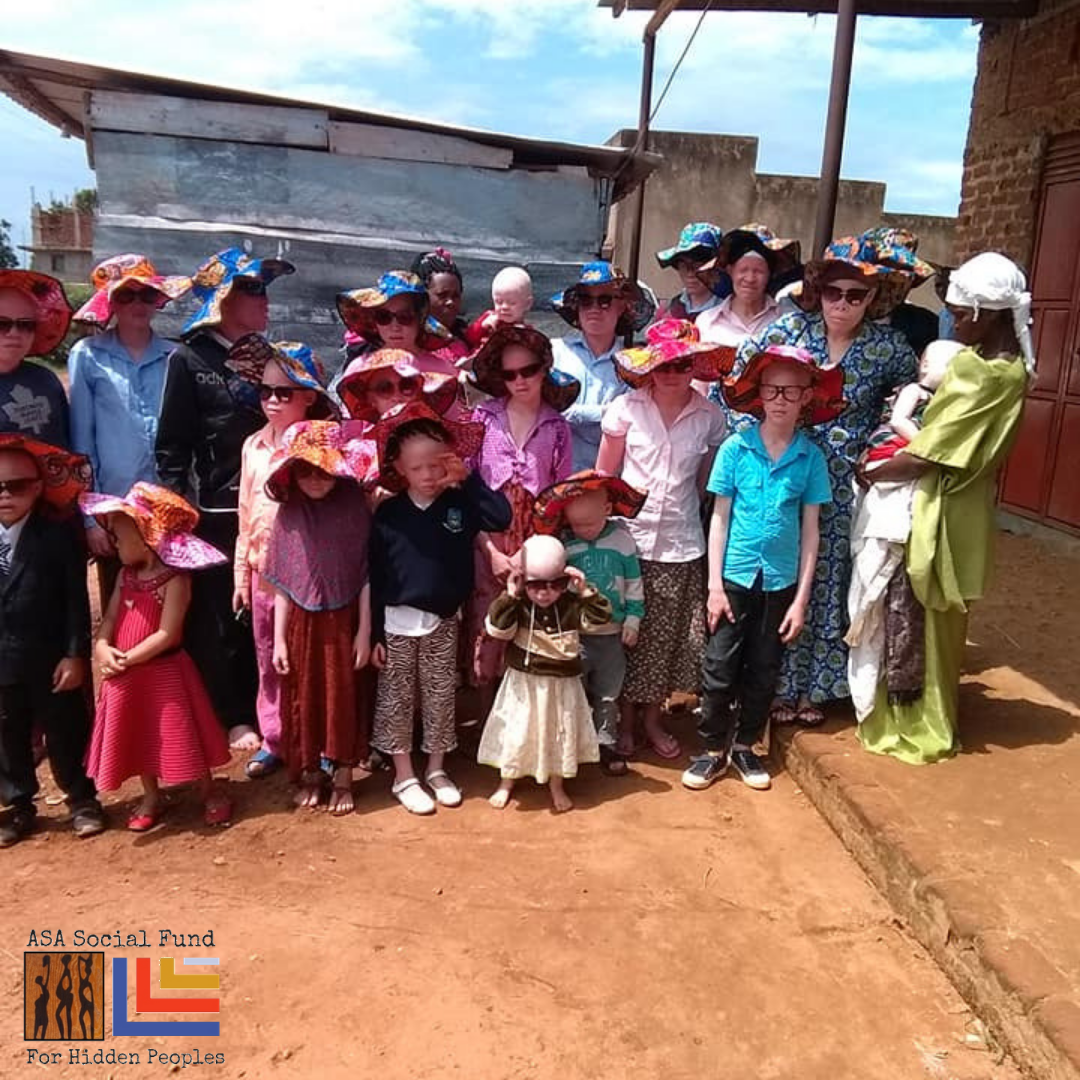
  • Through our health and basic needs priority area this year ASA has provided funds for the Iganga Albino population. Their sensitive skin is often damaged and harmed by the sun's intense rays. ASA purchased material for hats to be made to protect their heads and also the purchase of sunglasses so that they can function and move outside in the hot equatorial sun.


  • Provided funding for the construction of a new bridge over the canals in the Katwa slums. In prior years, sadly, due to poorly constructed, makeshift bridges, there were several fatalities each year when children were attempting to cross the trenches in #katwe during heavy rains This year, thanks to the bridge Asa funded, it was reported there were no fatalities this year.

  • Provided funds for the construction of new latrines for our partner Great Kings and Queens Children's center after major flooding destroyed the existing latrines.    

  • Hosted Victoria Nalongo Namusisi, Co-Founder and Director of Bright Kids Uganda, during her visit to Pittsburgh in October. Bright Kids Uganda has been ASA’s partner since 2008.  Victoria spoke at various events including visits to University of Pittsburgh and Carlow University. Victoria will also meet with Heavens Family of Pittsburgh (Bright Kids Uganda supporters) and also with volunteers and interns who are interested in working in Uganda in 2020.

This is a sampling of some of our greatest accomplishments for 2019.    As we start 2020, we look forward to sharing even more successes with you. 


Monday, March 4, 2019

Walk Down the Hill


ASA Treasurer, Pauline Greenlick, visited Uganda this past June. She shares about her experience meeting one of the many Hidden Peoples ASA is striving to help.  


Our van was parked at the top of the road. The rain stopped but the road below us was a sea of orange mud.  The driver was young, all of 18. But experienced. All Uganda drivers have to know how to drive on the Uganda dirt roads. He claimed the road down the hill was impassable. We believed him.  Orange mud, 2 foot deep ruts, deep pools of rainwater hiding even deeper ruts. There were 5 of us in the van, including the driver: myself, a psychologist, an intern from the University of Pittsburgh, and Yeko, a disabled man who runs another local nonprofit.   We all took in a huge breath of resignation and we had to figure out how we would get down this hill of mud and water.

I told them the woman’s story the other day. The woman who was waiting for us at the bottom of the hill.  They wanted to meet her too. The van doors opened and the two young woman moved quickly. Down the hill. I waited until Yeko painfully got out of the car. The driver helped him.  One of his legs is shriveled and he walks unevenly. His back is bent too. I thought I would walk behind him. To hold him up?  What if he falls? Into the mud? Into a rut? I offered to support him, but he said he was ok.

She sat there in a plastic white chair, there were additional plastic chairs around her. Empty, waiting for us too.  We greeted her, she smiled, we sat down in a semi- circle. Surrounding her.  I see her shriveled toes peeking out from under her long dress, her toes bent backwards and under her foot, her shriveled and bent hand and fingers bent under like a backward claw laying on her lap.  For the first time, I noticed her shriveled arm and leg, there was no muscle to support the bone.  Just bone, a thin bone.  She smiled at me.  We could only communicate with smiles and gestures.  She doesn’t speak English.  She is Muslim, her veil gently covers her head.  Her smile reveals only a few teeth. She wears a pretty patterned skirt, long to cover her legs, modestly covering her painfully thin and frail body.

I worried that she would have her hopes up too high when we said we would come.  I repeated the day before that we were there for emotional support only.  We could not promise anything else. We all knew her story before we entered that room. That is why we needed to get to the bottom of the hill and meet her.  I told them she lives in Katwe Slums, the filthiest slums in Kampala.  I told them how she was raped for over10 years.  

Her rapes produced 5 children. She was taken advantage of sexually because she was disabled.  She had a small shop on the mud streets of Katwe, only to be robbed of everything.  She could not even afford a door to her shack.  Men would enter and take advantage of her because she was frail and disabled.  She has had a sad life.  She became literally hidden, hidden from sight, hidden from society.  Hidden from the public, hidden from shame, hidden from the poverty, hidden from the world. Who cares or cared.


Medi cared. He is the man who was with us that day.  He runs a school for the street children from Katwe.  He met her in Katwe and told me she needed help. Her 5 children needed help. What could we do?  I sat there looking at her, the other 2 women did too. 

We were all silent until Yeko spoke and offered her words of support. Told her his challenges and struggles as a disabled man and how he was hidden too from society.  She started to smile.  He took her hand, looked at it and we figured she had been stricken by polio. She said she was crippled her entire life. 

Yeko asked about her arm and leg. He said he believed she had polio.  He shared the time he got polio.  He showed her his leg. He shared how hard it was to be disabled in Uganda. He shared how difficult it was to get an education and earn a living.  As he talked, her smile grew broader and she lifted her head up and started to talk with him in her language.  

For a long time, she was silent. I asked what can we do to help.  Medi talked about something – a ridge, a bridge.  I asked again what is what he said and he replied, a ridge, a bridge.  I finally asked him to draw it.  Oh a Bridge I said.  Where would this go.  He said a bridge could be built over the water trenches you see everywhere in Katwe.  They are actually open sewers. They are about 5 – 10 feet wide and course through Katwe like an open stream of filth. She could set up her store and sell packaged food items to people who need to cross the bridge.

So we had a plan. The woman smiled more and started to talk about what she could sell. I asked can she handle money. Medi said yes.  Can she count back change.  Medi said yes.  Can she sit on the bridge without falling over into the dirty water trench. Med said yes.  Can she  pull herself up and down and walk to the bridge from her shack.  Medi said yes.

So this is how I can help her, just one of the millions of hidden people in Uganda.  We would raise funds through our non-profit ASA Social Fund for Hidden Peoples.  Medi said she would need $1000 to have the bridge built and buy enough capital to stock her store on the bridge.

We left the woman with a plan.  But before I left, I quietly slipped behind and talked with Medi.  What does she need right now, I asked.  Money for her children.  Through ASA Social Fund for Hidden Peoples Emergency Fund, we donated enough to buy 3 beds, some clothes, blankets, and school supplies so they can stay with him in his school. The rain had long ago stopped and the mud hill dried up leaving only gaping ruts and potholes. Our driver had somehow eased down the hill and we easily climbed in this time. We left the woman with a tiny ray of hope. Maybe.

Time has passed. Months. I am back in the US.  I asked about the woman.  Medi said on Whats App, she is very sick.  He said she is extremely malnourished and needs emergency medical care. ASA supported her through a second grant from our emergency fund: money to save her life. So right now we are helping her stay alive, her bridge will have to wait for another time in the future.

Tuesday, October 30, 2018

Ronald Kasozi Bright Kids Uganda


The above video shares the story of Ronald Kasozi's life.  Ronald is just one of many examples of the hidden people ASA aims to support.  Because of the support of donors and supporters Ronald was able to graduate with his degree in Pharmacy in October 2017.

Thursday, October 4, 2018

Connie Amongi ,Bright Kids Uganda

Beginning in the late 1980’s much of Uganda’s population endured many horrors at the hands of the Joseph Kony and his Lords Resistance Army. Thousands of people were killed, children were abducted and more than 1.7 million were forced to flee their homes during Kony's reign.

Connie was one of the thousands of children who were impacted by the atrocities of the LRA. Connie grew up in northern Uganda. As a young girl, she witnessed her father murdered and her mother captured by the Lords Resistance Army. She and her brothers and sisters were left with no parents and no home. They were rescued by Victoria Nolango Namussisi, who runs Bright Kids Uganda, a children’s home for abandoned children. At Bright Kids Uganda Childrens home, Connie was provided food, shelter and school fees so she was able to continue her education. Despite her challenges, she is now happy and has completed her university studies with a degree in agriculture.


 You can watch the video below to hear Connie tell her story: